
RBA Governor Michele Bullock said that the board knew excess demand was a risk as far back as August.
One of Australia’s biggest banks has called time on the housing boom for half the country – just hours after the RBA conceded rate cuts fuelled excess demand faster than expected.
In a bold market call published hours after the RBA’s Tuesday rate increase, ANZ Research economists Madeline Dunk and Jack Chambers said “Australia’s housing market looks to be on the cusp of a modest slowdown”.
They believe “leading indicators suggest momentum is fading” and the rate hike itself could be the first nail in the coffin for the boom – for half the country at least.
ANZ is the first major bank to downgrade the housing outlook following Tuesday’s rate hike, with other big four banks expected to also update their forecasts.
MORE: Rinehart’s shock sell-off puts govt on notice
‘Out of control’: Brisbane house prices up $149k in one year
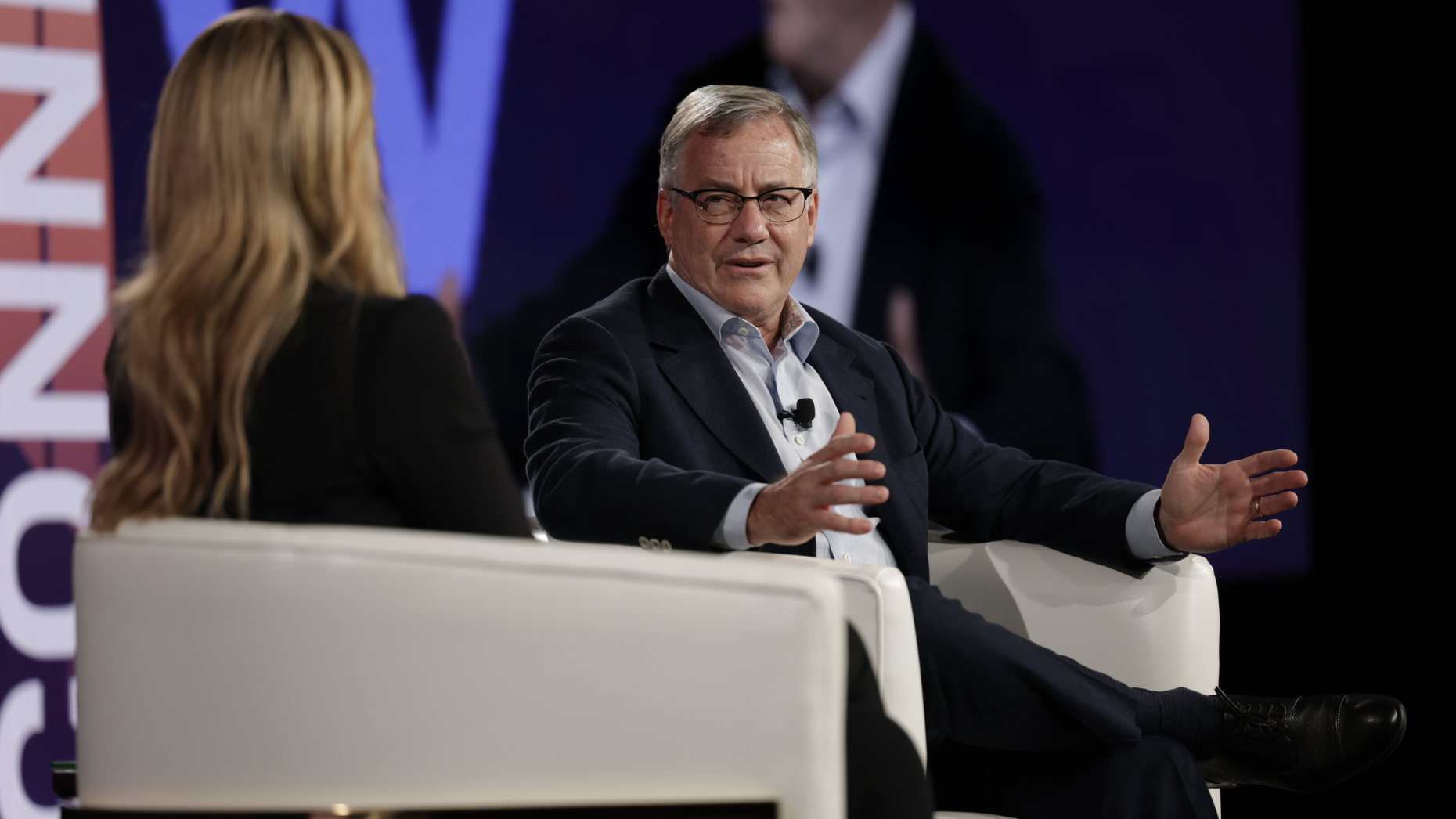
RBA Governor Michele Bullock said financial conditions were “just a little bit loose”. Source: Getty
This as Governor Michele Bullock revealed a risk the central bank flagged as far back as August has now materialised.
“In our August statement we highlighted… that excess demand was potentially a risk that we weren’t picking up,” she said. “That’s turned out to be a risk that has eventuated.”
The RBA cut rates three times through 2025 – in February, May and August – with the August statement simultaneously warning about excess demand risk even as it delivered the final cut.
“What we’ve observed is that with financial conditions easing, as the cash rate eased, private demand has responded. And that’s sort of what it’s supposed to do, but it looks like it’s come back a bit more quickly than we’d thought.”
Asked whether financial conditions remained restrictive, Ms Bullock said “the board generally feel that at the margin maybe conditions were just a little bit loose, particularly given what we’re seeing in the recovery of private demand.”
The comments suggest the central bank cut rates too aggressively into a housing market that was already recovering strongly – and is now reversing course after scorching credit growth since August.
The policy challenge was compounded by record migration and supply-side constraints.
However, the RBA’s own concession that capacity pressures were “greater than previously assessed” suggests the central bank misjudged how much stimulus the economy could handle.
RBA cash rate decisions in the past year – with effective date, change % points and cash rate target %. Source: RBA
The 25 basis point increase announced on Tuesday takes the cash rate to 3.85 per cent, the first hike since November 2023 and a sharp reversal after those three rate cuts in 2025.
ANZ’s slowdown warning comes despite national home values rising 0.2 per cent in January – with the headline figure masking a market splitting in two.
PropTrack data released Monday shows Sydney and Melbourne already falling while Perth, Brisbane and Adelaide continue to surge.
ANZ Research said “Melbourne and Sydney dwelling prices have fallen 0.1 per cent since November, and Sydney’s most expensive properties have declined for three months in a row”.
PropTrack data confirms Sydney home values rose just 0.1 per cent in January and remain 0.4 per cent below their November peak, while Melbourne values fell 0.1 per cent and are now 0.8 per cent below their October high.
The major bank said when considered alongside weakness in auction clearance rates and the RBA’s rate hike, “it is likely that these markets remain subdued” – even as other capitals charge ahead.
Adelaide led the monthly gains in January (+0.9 per cent), followed by Brisbane (+0.4 per cent) and Perth (+0.3 per cent).
Over the past year, Perth has surged 17.5 per cent, followed by Darwin (+14.7 per cent), Brisbane (+14.4 per cent) and Adelaide (+13.8 per cent).
By contrast, Sydney recorded annual growth of just 5.7 per cent, while Melbourne managed only 3.5 per cent – a stark divide that underpins ANZ’s slowdown call for half the country’s property market.
A low level of listings is helping keep markets tight.
It said for capitals that were still showing strong growth, “low levels of listings are helping to keep these markets tight”.
The ANZ warning contrasts with the RBA’s more bullish assessment. Just hours before ANZ published its research, the central bank said “activity and prices in the housing market are also continuing to pick up”, pointing to strengthening private demand.
Ms Bullock said “demand was stronger than expected over the second half of 2025 and we think some of that strength has carried into 2026”, with investor housing credit growing at its highest rate since 2015.
The RBA also noted that “inflation is likely to remain above target for some time”.
But ANZ said “there are signs the upward trend in building approvals has stalled”, with approvals down 8.5 per cent since September, driven by a 19.6 per cent plunge in private unit and townhouse approvals.
Despite these early warning signs, borrowing does currently remain robust. Private sector credit growth rose 0.8 per cent in December, the strongest monthly gain since 2022, while investor housing credit jumped 1.0 per cent – the biggest monthly lift since 2007.
ANZ Research believes the strong credit numbers are misleading given weakening conditions already visible in Sydney and Melbourne.
“It will likely take time for any softness in the broader housing market to show up in the credit numbers” due to typical lags between housing price movements and lending data.
For borrowers, the mixed signals add to the confusion, where the rate hike will already add around $80 per month to repayments on a $500,000 mortgage, $120 on a $750,000 loan, and $160 on a $1 million mortgage.
A typical home loan will see over $1,000 a year extra in interest rate charges after Tuesday’s rate hike.
ANZ was among major banks to pass on the 0.25 percentage point increase to variable rate home loan customers, with Commonwealth Bank, ANZ and NAB implementing changes from February 13, and Westpac following on February 17.
The RBA has also left the door open to further rate increases, saying it would “do what it considers necessary” to return inflation to target while supporting full employment.
In a separate analysis, ANZ’s Head of Australian Economics Adam Boyton warned that “risks are clearly skewed to an additional hike” given the RBA’s focus on capacity constraints driving the inflation spike.
Asked about further hikes yesterday, Ms Bullock said “could we do a lot of rate rises and bring inflation down very quickly? Possibly, but it might have big implications for the unemployment rate and the economy”.
“I’m not predicting there will be more rate rises but I’m also not saying that if inflation does remain too high that there mightn’t be.”
All four major banks have passed on the rate hike to variable rate customers.







 English (US) ·