
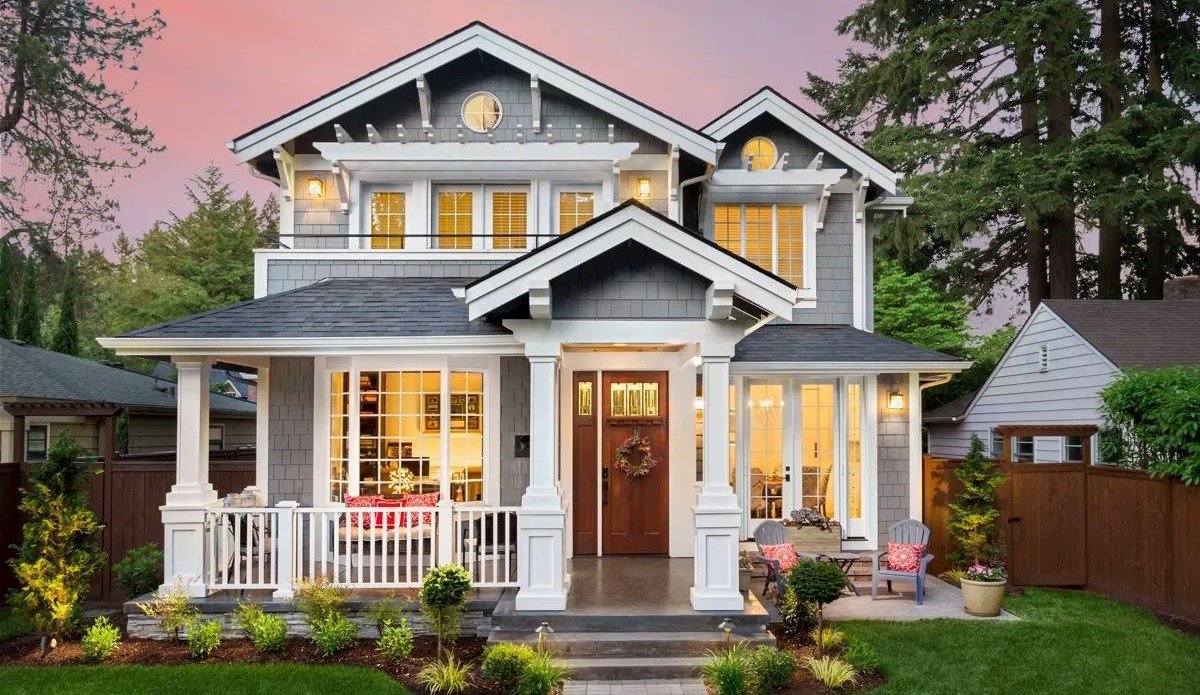
It’s time to consider packing your belongings and moving into your dream home. But what is your dream home? Is it a remodeled existing house, or something you build from scratch? Does a new construction meet your needs or your budget? Do you know off the top of your head if it’s cheaper to build or buy a house?
You’ll want to maximize the features and space you’re going to get for what you’re spending, so that six months from move-in, you are not regretting your decision.
Let’s break down what you’ll pay with self-built, new, and existing homes, so you can narrow your search enough to have a great real estate agent take you the rest of the way to your dream home.
Even if you’re just day-dreaming at this point, it’s never too early to ask a local real estate agent for advice on building a house.Step one: Talk to an expert!
Self-built homes
There are build-your-own-house programs that can make this cheaper, or you can use shipping containers or tiny homes, so you have a lot more flexibility with price — to a point.
HomeLight’s own experts have determined you can build your own home for anywhere between $130,000 and $535,000, depending on various factors, including square footage, energy efficiency, and the level of DIY.
If you’re thinking of building your own home, Ben Marciano, seasoned contractor and owner of A-List Builders, has some sound advice.
“In general, it is totally possible to build your dream home, but it’s critical to work within your budget, and be realistic about it, to make it happen. Understanding how to measure for materials is key, in addition to understanding the skeleton of your home for remodels that aren’t just skin-deep.”
Pros of building your own home
There are several pros to building your own home as opposed to buying one that was constructed to someone else’s specifications.
- Tailored to your preferences. “If you design the home, it’s tailored to your taste, and if you’re a very finicky person, that might be the right way to go,” says Ralph Modica, a New York condo expert whose average listing sells for $1 million. He often works with clients who expect a lot of customizations in the home they’re considering building or renovating.
- Costs less to live in. New construction tends to be more energy-efficient, and you won’t be heating or cooling unnecessary or unused spaces.
- Costs less to maintain. All new fixtures and appliances mean you have a while before anything needs repair, and they’ll be under warranty for a while if something does go wrong.
- You’re not paying for extras you didn’t want. Every amenity or feature is one that you carefully selected and prioritized, and therefore is worth your investment while you live there.
- No competition from other buyers to get the house you want. Building your own home means there is no risk you’ll be outbid by another buyer.
- You’re the first to own it! Who doesn’t love the fact everything is pristine and perfect?
- Better resale value. There is generally less wear and tear on a 10-year-old house than on a 100-year-old one. When you’re ready to move, you may get more money for it than a similarly designed older home.
If you need help financing your building project, you can apply for an owner-builder home loan. These loans can give you the flexibility to DIY and shop for contractors, which can save you up to 40% on your construction costs, while also allowing you to build up equity as the construction progresses.
Cons of building your own home
- More expensive than buying an existing home. Buying an existing home will nearly always be cheaper than building a new home. Judah Strausberg, senior project manager at Peak Builders and Roofers San Diego, explains, “The material cost that spiked the most is lumber and plywood, which has gone up over 100% to 150% in [recent years]. Plumbing material (plastic) went up over 50%, and paint over 10%.” And these costs have to be passed on to the homeowner.
- Longer construction time. Waiting for your dream home to be built often takes more time than buying one already built, especially if there are any supply chain delays or a long waiting period to get on your desired contractor’s schedule.
- There’s more paperwork to apply and higher fees. Because you aren’t a trusted builder, you’re going to have to jump through more hoops to prove the construction will be successful and to make the risk the lender is taking worthwhile.
- You’re responsible for every decision, which can add up to an extra mental load when you’re busy with work and family. You’ll need to be able to troubleshoot issues as they arise and deal with any contractor miscommunications or issues.
- Trends might fade faster than you think, leaving you with a dated house that is hard to sell.
- You’re responsible for designing and planting all the landscaping or hiring someone. If you love trees or flowering plants that take a few years to mature, you’ll have to wait for them to do so.
- Fewer options for negotiating on price. You can, however, make decisions upfront that can help you dial in the cost. Decisions like where to build and how much help to leverage can have a huge impact on the price tag for your self-built home.
If you can find and qualify for a build-your-own-house program, you may have a bit more leeway, budget-wise.
Things you’ll need to consider are land costs, foundations, permitting, systems (HVAC, plumbing, electrical), appliances, finishing, roofing, fixtures, and so much more. To understand what these costs might look like, check the helpful chart at the bottom of this article.
New construction
In April 2026, the U.S. Census Bureau listed the average sales price of a new home at $508,800 and the median sales price of a new home as $422,500, which reflects variations in size, location, and features of the houses being sold.
While the final cost per square foot will depend on several factors, including location, house size, and customization, you have some control over many of those factors, which means your new construction home could be well above or well below that number.
Pros of buying new construction
Buying new construction offers many of the same pros as building your own house but is much more convenient. Your customization options will be more limited, but you can still choose from different floor plans and finishes.
- A developer will hook you into the sewer system and electrical grids. Given how time-consuming and expensive this can be when building your own home, this is a major plus.
- You can lower lot costs with new construction managed by a developer. “If you go with a developer or builder in the neighborhood setting, your lot cost is very inexpensive because they tie in the cost of your lot to the build, so they can make it a lot more affordable, and you’re not paying for tap-ins or land development,” Andrew Dellavecchia, a single-family-home expert in the Pittsburgh area who recently purchased a new construction home, offers firsthand insights. “The builder takes all that cost off of you so you can focus on putting the money that you want to spend in the square footage, the fixtures, the finishes, and things like that.”
- Access to new construction home loans. Because you’ll be working with a qualified builder, you’ll have access to new construction home loans, designed to make the financial part easier by allowing you to “draw” money out in increments, as stages of construction are completed. Once the last draw is completed, the new construction home loan can be refinanced into a traditional mortgage, with principal and interest payments.
- New construction homes often have system warranties. These will cover many big issues for the first 10 years you own the house. If you’re unlucky or just put a lot of wear and tear on the systems, this can lead to big savings on repair bills.
- Potential for resale at a profit. New construction homes, if chosen wisely, can hold their value or even increase in value after you buy, making them a good real estate investment option.
Cons of buying new construction
- Less customization. In many ways, buying new construction will mean a house that’s less customizable than building your own house. You won’t have complete customization abilities with a new construction home, as the developer will work on a tighter schedule.
- Lower negotiation potential. Generally, it’s hard to negotiate on price with new construction. Developers have a certain price to sell the home to make a profit. Profit margins vary by state, with the average gross profit margin clocking in at 20.7%.
- Build time is increasing along with new construction prices. Ben Neely, President/Owner of Riverbend Homes, a boutique custom home builder in the Austin, TX area, shares that both build time and cost for new construction have been on the uptick since 2021, with no sign of slowing down. “Our build times on a standard 3,000-square-foot home has been extended from 7 months to around 12 months because of material supply chain issues.”
- Expect a higher construction budget. If you’re using a new construction home loan to finance your expenses, you may end up paying a higher rate or being stuck if your project runs over budget due to supply chain or availability issues.
- Additionally, construction might be happening around you for some time after you move in! Just because your home is move-in-ready doesn’t necessarily mean the entire development is finished, so you might be dealing with ongoing construction for a bit.
- You’ll also pay extra for premium upgrades to finishes or appliances. While upgrades always cost money, expect to pay more than you would on the open market.
- Budget for ongoing fees. There might be other fees that you need to pay while you own the house. Homeowners Association (HOA) fees are a good example of ongoing fees, so consider them when determining your budget.
Existing homes
The median price for an existing home was $417,800 in April 2026, according to the National Association of Realtors. Given the wide price range of self-build homes, this price could be lower or higher than the cost of new construction. If you’re very budget-conscious, an existing home can be a good option, but there are other potential drawbacks you’ll want to consider.
Pros of buying an existing home
- You can buy when you’re ready. It’s easier to optimize for a better buyer’s market by purchasing when everyone else is waiting for spring. Dellavecchia clarifies, “In a seller’s market, the opportunity to get a better deal is in the fall and winter on buying, but most buyers don’t realize that and like to wait for the spring market.” You won’t always have that option when you’re buying new construction, and when building a house, you’ll also be constrained by the climate and weather in your area when hiring contract workers to help.
- It’s the fastest way to own a house. An existing home is already built, which means you aren’t waiting months to move in while you work with architects. And builders. And zoning regulators. And so on.
- The landscaping looks better. The trees and landscaping are likely to look nicer than with a newer home because the plants have had a chance to grow and settle into the design.
- You can time the move. If the market is already good, you can move when it’s most convenient for you, whether it’s because the kids are out of school or there is a lull at work.
- You benefit from previous owners’ customizations. You may also get lucky and end up with furniture suited to the home — like custom-built bookshelves — if the current owner decides it’s easier to leave them or if they don’t work in their new place. If you’re looking for something move-in ready, this can be a great perk.
Cons of buying an existing home
- It might need repairs sooner. Because other people have been putting wear and tear on the home, you may need to repair parts sooner than you would with a new construction.
- Renovations come with complications. You’ll have to renovate or upgrade to make it what you want. And when you do, you’re limited to what the floor plan, size, and other variables allow. You may also have to wait for the products you need for the renovation, due to supply chain delays and high demand.
- DIY remodeling might compromise your home’s structural integrity. Marciano elaborates: “One major contender in navigating your home remodel is understanding if what you want is structurally possible.” What seems to be a cosmetic change might actually be a significant structural change. “An example would be when homeowners come to a contractor and want to ‘open up their kitchen,’ not realizing that the wall making it a ‘closed’ kitchen is a supporting wall for other parts of their house. This could result in going well over budget and cause delays in work if realized too late,” Marciano adds.
- It will likely be less energy-efficient than a new home. Many of the regulations and best energy efficiency practices are improving yearly.
- You don’t know what the seller didn’t tell you. Water leaks and mold issues can be easy to disguise and may not be evident until after you’re settled in, at which point, they’re your problem. In theory, this shouldn’t happen, but sometimes these things can be hard to prove.
So what should I do?
While it is almost always cheaper to buy a house that’s already been built, there can be ways to minimize your spending and ensure you end up in your dream home without blowing your budget.
Finding a great real estate agent who understands your needs and budget is a critical step to making your dream home happen, whether it’s already been built or needs to be constructed from the ground up.
| Average costs: | Self-built | New construction | Existing home |
| Site Work | $32,719 | With an existing home, these have already been covered by the original homeowner and you only need to worry about the sticker price + the cost of any adjustments you may want to make. | |
| Building Permit Fees | $8,500 | ||
| Impact Fee | |||
| Water & Sewer Fees Inspections | |||
| Architecture, Engineering | |||
| Others | |||
| Foundations | $4,028 – $14,770 | $44,748 | |
| Framing | $1,407 – $7,676 | $70,982 | |
| Exterior Finishes | $57,510 | ||
| Exterior Wall Finish | $25,000 – $60,000 | ||
| Roofing | $6,885 – $23,993 | ||
| Windows and Doors (including garage door) | $11,890 | ||
| Other | |||
| Major Systems Rough-ins | $82,319 | ||
| Plumbing (except fixtures) | $10,000 – $20,000 | ||
| Electrical (except fixtures) | $4,000 – $20,000 | ||
| HVAC | $5,000 – $12,500 | ||
| Other | |||
| Interior Finishes | $103,391 | ||
| Insulation | The cost of these will depend on how much you want to DIY vs hire contractors to help. | ||
| Drywall | |||
| Interior Trims, Doors, and Mirrors | |||
| Painting | |||
| Lighting | |||
| Cabinets, Countertops | |||
| Appliances | |||
| Flooring | |||
| Plumbing Fixtures | |||
| Fireplace | |||
| Other | |||
| Final Steps | $27,710 | ||
| Landscaping | |||
| Outdoor Structures (deck, patio, porches) | |||
| Driveway | |||
| Clean Up | |||
| Other | |||
| Other | $8,835 | ||
| Total Cost | $130,000 – $535,000 | $665,298 | $417,800 |
Sources: National Association of Home Builders (NAHB), Angi, This Old House, National Association of Realtors, HomeLight
Amna Shamim contributed research and writing to the most recent version of this story.
Header Image Source: (sculpies / ShutterStock)




 English (US) ·