
As Australia pushes towards its target of building 1.2 million new homes by 2029, prefab is gaining traction as a faster and potentially more predictable alternative to conventional building.
A Yelverton, WA, home from prefab builder Pique. Image: PrefabAUS
Once associated with basic cabins or temporary structures, prefab is now being redefined by better materials, advanced manufacturing and growing confidence that it belongs in the mainstream.
For buyers, that momentum is raising a familiar set of questions: how much does it cost, how flexible is the design, how fast can it be built, what is it made from, and will it last?
Here are answers to five of the most common questions that buyers are asking as they consider a prefab build.
Is prefab actually cheaper?
Not always – and several people in the sector say that is the wrong starting point anyway.
Harrison Marsh, co-founder of sustainable building companies Otetto and Living Canvas, said that while prefab can reduce overall costs, the bigger advantage is cost certainty.
“With most of the construction happening off-site in workshop conditions, weather delays, labour shortages and unexpected variations are far less common,” he said.
That predictability matters in a market where build blowouts remain a real risk.
Andrew Hamilton, founder of Euca Built, said prefab’s value extends beyond the headline price.
“Many people mistakenly approach prefab thinking that the only benefit is that it’s cheap. While the ticket price can be similar to what a traditional builder may quote, you’ll get more predictable pricing with less variations, quicker completions with less delays and less site disruptions with offsite construction.”
When it comes to costs, one major sticking point of the past was securing finance for prefab builds, but that's beginning to shift.
CommBank, which now has a dedicated prefab construction loan pathway, offers funding during the off-site build stage for prefab homes, including up to 80% of the build contract price for customers using a CommBank Assessed Manufacturer.
A Burradoo, NSW home from Modscape. Image: PrefabAUS
Do prefab homes all look the same?
No – and builders say this is one of prefab’s most outdated myths.
Today’s prefab no longer means a basic, standardised home. Modern systems can suit small urban sites, sloping blocks, infill projects or regional settings, with far more architectural variation and customisation than many buyers expect.
Advances in digital design, precision engineering and factory-led construction have made prefab far more flexible than it once was, giving buyers more scope to tailor a home to their site, lifestyle and design preferences.
As Mr Hamilton put it, “Prefab homes don’t all have to look the same, but achieving great design requires the right approach. Prefabrication brings real efficiencies, and the best outcomes come when those efficiencies are balanced with strong architectural thinking".
That matters because buyers are no longer being asked to trade good design for practicality; prefab can deliver homes that feel sophisticated, site-specific and distinctly their own.
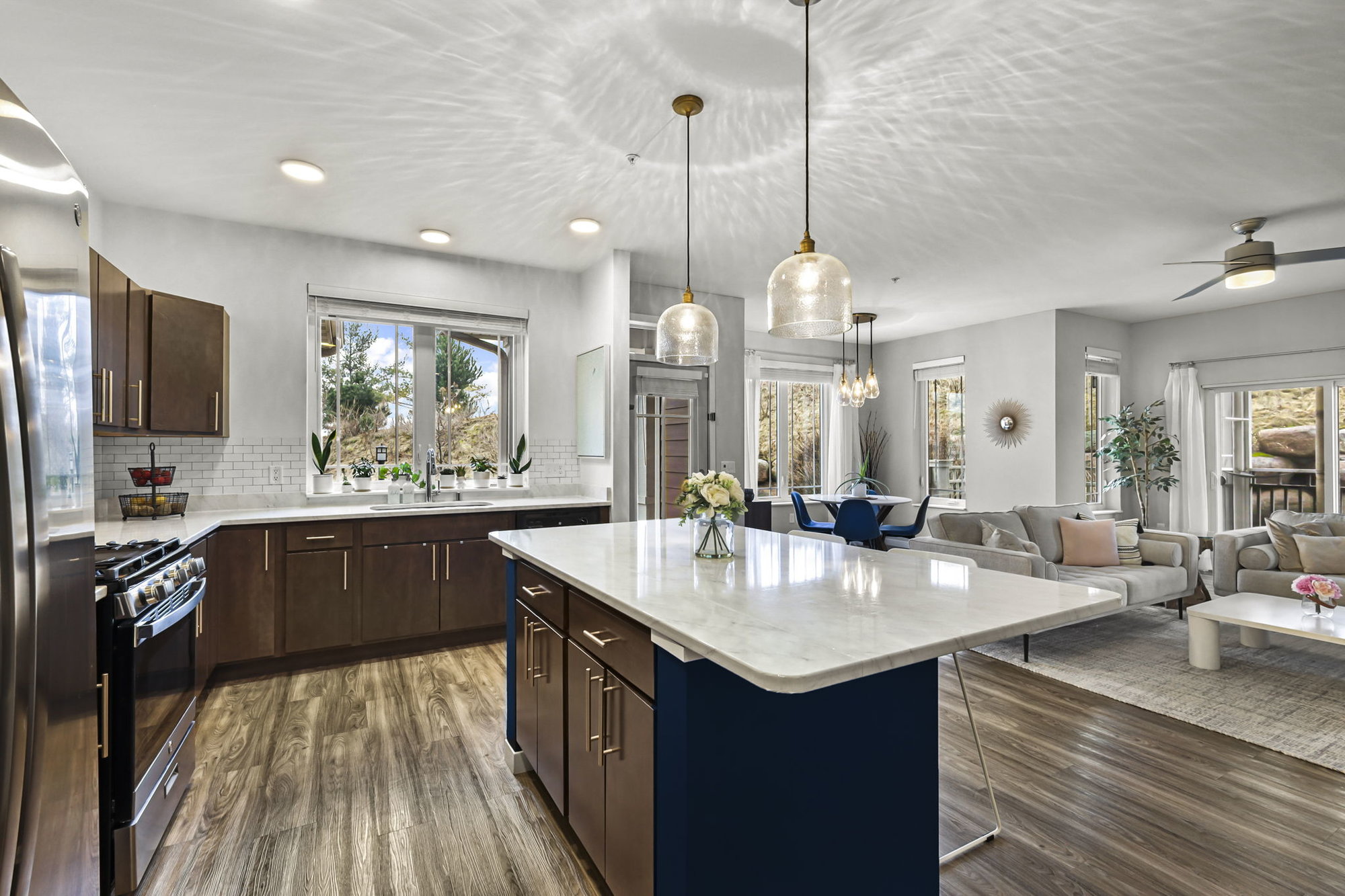
Internal image of a home by Pique. Image: PrefabAUS
How fast can a prefab home be built?
Speed is one of prefab’s biggest drawcards.
By shifting much of the build process off-site, prefab can significantly accelerate delivery.
“The structure of a house can be completed on site in as little as three days,” Mr Marsh said.
“While site works are underway, the home’s structural panels – walls, floors and roof sections – are manufactured off-site. This overlap can reduce construction timelines by months compared with traditional builds that are exposed to weather and on-site delays.”
At a broader industry level, Damien Crough, executive chair of prefabAUS, said conventional suburban home delivery takes around 55 weeks, based on 2024 Master Builders data, while its members typically deliver a new home in 16 weeks on average.
“It is very exciting to see what many of our members are able to build with increasingly shorter timelines yet with ever-increasing quality,” Mr Crough said.
“We think that is a big part of the reason that consumer sentiment is shifting.”
That combination is especially attractive in regional areas, on difficult sites, or anywhere weather and labour delays can derail a traditional build.
The Berkeley design from Wild Modular. Image: PrefabAUS
Is prefab more sustainable?
Modern prefab is not defined by a single material or system.
But as it's an innovative industry, forward-thinking prefab manufacturers are increasingly pairing their projects with lower-impact materials, advanced manufacturing, and a growing focus on homes that are healthier, more energy-efficient and better-performing over time.
For example, one material Mr Marsh advocates for is hempcrete, made from the inner core of the hemp plant combined with a natural binder.
“Hempcrete is naturally fire-resistant, pest-resistant, breathable and low in embodied carbon,” he said.
But the bigger story goes beyond any one product: it reflects a broader shift towards healthier, lower-impact homes and more controlled, quality-assured building processes. Factory-based construction can also reduce waste, improve quality control and limit some of the inefficiencies that come with fully on-site building.
A prefab home from builder Pique. Image: PrefabAUS
Are prefab homes durable?
On durability, builders say the key issue is not whether a home is prefab or traditional, but how well it is designed, engineered and built.
“Prefab does not mean temporary or lightweight,” Mr Marsh said.
He, along with other builders, noted that factory-built components can be more consistent in quality because they are produced in controlled conditions and undergo strict testing before leaving the workshop.
Are you interested in buying or building new? Check out our dedicated New Homes section.







 English (US) ·